Vape Tax UK 2026: Are Vapes Taxed Like Cigarettes & How Much Will Prices Rise?
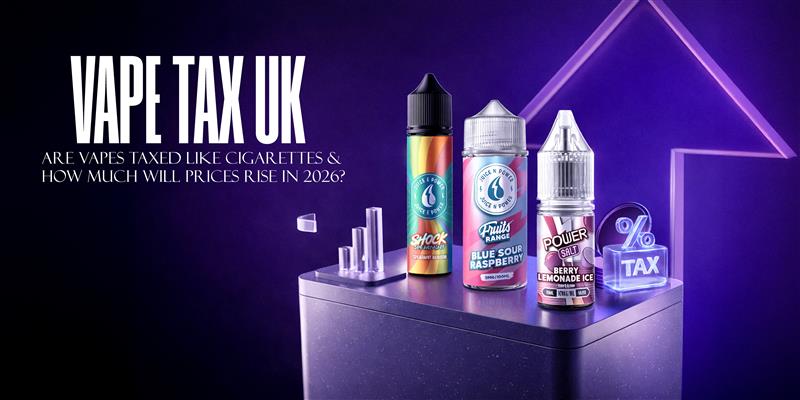
The vape tax UK is officially coming in 2026, and it will change how much you pay for vape liquids across the country. If you’re wondering whether vapes will be taxed like cigarettes and how much prices could rise, this guide explains everything clearly and is based on official government information.
From October 2026, the UK will introduce a new excise duty on vape liquids called the Vaping Products Duty. This means the more e-liquid your product contains, the more tax will be added to its price.
The government has outlined these changes in its official guidance titled Preparing for Vaping Products Duty and the Vaping Duty Stamps Scheme, which explains how the new tax system and duty stamps will work.
In this guide, you’ll learn:
-
Whether vapes are currently taxed?
-
When will the vape tax 2026 start?
-
How much is the tax on vape liquid?
-
Whether vapes are taxed the same as cigarettes?
-
How much will vapes cost after the new tax?
Let’s break down what all this means and how it could affect vape prices in 2026.
Are Vapes Taxed in the UK Right Now?
No, vapes are not currently subject to a separate excise duty in the UK. At the moment, vape products are only charged the standard 20% VAT, just like most other retail goods.
This means that before October 2026, there is no additional vape liquid tax applied per millilitre. Whether you buy bottled e-liquids, Nic Salts, or Prefilled Pod Vape Kits, you’re only paying VAT, not a dedicated vape tax yet !
The confusion often comes from how cigarettes are taxed. Tobacco products already have a long-standing excise duty on top of VAT, which is why cigarette prices are significantly higher.
Vape products have not followed that same tax structure, at least not until the vape tax 2026 comes into effect.
So if you’re asking, “are vapes taxed in the UK?” - the simple answer is:
1. Yes, they are taxed with VAT.
2. No, they are not yet taxed with a specific vape excise duty.
That changes in October 2026.
What Is the Vape Tax UK and When Will It Start?
The vape tax UK is a new excise duty that will apply to all vape liquids from October 2026. It will be charged per millilitre of e-liquid, regardless of nicotine strength.
This new duty is officially called the “Vaping Products Duty”. It was announced as part of the UK’s wider tobacco and vaping regulation changes and will apply to products manufactured in the UK as well as those imported.
According to the government’s guidance, including “Preparing for Vaping Products Duty and the Vaping Duty Stamps Scheme”, the rollout will happen in stages:
-
April 2026 - Businesses must begin registration and approval processes
-
October 2026 - The vape liquid tax officially comes into force
-
April 2027 - Duty stamps become mandatory on all retail vape products
This means that from October 2026, any product containing vape liquid, including Nic Salts, 100ml Shortfill E Liquids, 50ml Shortfill E Liquids, and Prefilled Pods, will include an additional tax based purely on the amount of liquid inside.
How Much Is the Tax on Vape Liquid in 2026?
The tax on vape liquid will be £2.20 per 10ml, which equals 22p per millilitre. That rate applies to all vape liquids, regardless of nicotine strength.
According to the official GOV.UK guidance titled “Introduction of Vaping Products Duty from 1 October 2026” states that the duty will be charged at a flat rate of £2.20 per 10ml of vaping liquid, whether it contains nicotine or not.
That means the new vape liquid tax is calculated purely on volume. The more liquid a product contains, the higher the total duty added to its price. Here’s how the official rate works in practice:
Official Vape Liquid Tax Breakdown |
||
|
Liquid Volume |
Tax Per ml |
Total Duty Added (Volume × 0.22) |
|
2ml pod |
£0.22 |
£0.44 |
|
10ml bottle |
£0.22 |
£2.20 |
|
50ml shortfill |
£0.22 |
£11.00 |
|
100ml shortfill |
£0.22 |
£22.00 |
For example:
-
A standard 10ml bottle of Nic Salt 10ml E-liquids would carry £2.20 in duty.
-
A 50ml bottle from the 50ml Shortfill E Liquids range would include £11.00 in tax.
-
Larger bottles, such as those in the 100ml Shortfill E Liquids category, would include £22.00 in duty.
If you use Prefilled Pods or Prefilled Pod Vape Kits, the tax will apply to the liquid inside the pod based on its ml capacity.
The key takeaway is that the duty is based on volume, not nicotine strength.
How Much Will Vapes Be When Taxed? (Realistic Price Impact)
Vapes will become more expensive in 2026, and the increase depends on how much e-liquid the product contains. The higher the liquid volume, the bigger the price rise.
Because the vape tax 2026 is charged at 22p per ml, larger bottles will see the most noticeable jump. Smaller 10ml bottles will increase too, but the overall rise will be lower compared to 50ml or 100ml options. Here’s a realistic illustration based on the confirmed duty rate:
Estimated Price Impact After Vape Liquid Tax |
||
|
Product Type |
Typical Current Price |
Estimated After Tax |
|
10ml Nic Salt |
£3 - £4 |
£5.20 - £6.20 |
|
50ml Shortfill |
£8 - £10 |
£19.00 - £21.00 |
|
100ml Shortfill |
£12 - £18 |
£34.00 - £40.00 |
|
2ml Prefilled Pod |
£4 - £7 |
£4.44 - £7.44 |
(Prices are illustrative and may vary depending on brand and retailer.)
If you regularly buy Nic Salts, you’ll see a £2.20 duty added per 10ml bottle.
If you prefer larger formats such as 50ml Shortfill E Liquids or 100ml Shortfill E Liquids, the increase will be more noticeable because the tax applies to the full bottle volume.
For users of Vape Kits, the cost rise depends on how much liquid they use inside each pod. A 2ml pod, for example, would carry an additional £0.44 in duty.
So if you’re asking, “How much will vapes be when taxed?”
The honest answer is that the impact depends on your usage. Light users may notice a small increase, while heavy users who go through larger bottles each month will feel it more.
Are Vapes Taxed the Same as Cigarettes?
No, vapes are not taxed in the same way as cigarettes. While both will see tax increases in 2026, the structure of the tax is different.
Cigarettes are already subject to Tobacco Products Duty rates and allowances, which are charged per pack and include both a fixed amount and a percentage of the retail price. On top of that, VAT is also applied.
The new vape tax UK, however, is simpler. It is based purely on the volume of e-liquid, 22p per ml, regardless of brand, strength, or retail price.
Here’s a clear comparison:
Vape Tax vs Cigarette Tax Comparison |
||
|
Category |
Vape Liquid |
Cigarettes |
|
Tax Basis |
Per millilitre (volume-based) |
Per pack + percentage of price |
|
VAT Applied |
Yes (20%) |
Yes (20%) |
|
2026 Increase |
New excise duty introduced |
Tobacco duty is also increasing |
|
Designed Purpose |
Regulation & revenue |
Long-standing tobacco control |
The government has confirmed that tobacco duty will also increase alongside the vape tax in 2026 to maintain a price difference between smoking and vaping.
According to NHS guidance on using e-cigarettes to stop smoking, vaping is significantly less harmful than smoking and is often recommended as a quitting aid. Even after the new vape liquid tax, vaping is expected to remain the more affordable option compared to cigarettes.
So if you’re asking, “Are vapes taxed the same as cigarettes?” the clear answer is no. The tax structure is different, and vaping is still positioned as the lower-cost alternative.
Why Is the UK Introducing a Vape Liquid Tax?
The UK is introducing a vape liquid tax to regulate the market, address youth vaping concerns, and generate additional public revenue. It is part of wider tobacco and vaping reforms planned for 2026.
The government has stated that the new duty aims to bring vaping products into a similar regulatory framework as tobacco.
The wider reforms are outlined in the Tobacco and Vapes Bill: creating a smoke-free UK and tackling youth vaping, which sets out measures to tighten vape regulation and restrict underage access.
The key reasons behind the vape tax UK include:
-
Strengthening market oversight through duty stamps
-
Reducing youth vaping incentives
-
Generating revenue alongside tobacco duty increases
-
Creating clearer enforcement powers for HMRC
At the same time, the government has confirmed that the tobacco duty will also increase. This is designed to maintain a price difference so that vaping remains a lower-cost alternative to smoking.
Who Will Be Affected by the Vape Tax 2026?
The vape tax 2026 will impact every part of the vaping supply chain, including businesses and consumers. If you purchase vape liquid in any format, you will feel the effect once the duty comes into force.
I. Manufacturers and Importers
Manufacturers and importers will be responsible for registering for the new duty and ensuring that all vape liquids are compliant before entering the UK market.
They must:
-
Register with HMRC
-
Pay the vape liquid tax before products are released
-
Apply official duty stamps once required
II. Retailers (Online and Physical Stores)
Retailers will not be allowed to sell any unstamped products once the full system is in place. If a product does not meet duty requirements, it cannot legally be sold.
III. Consumers (Vapers)
As a consumer, the impact is simple: prices will increase based on how much liquid you use. If you buy smaller bottles such as Juice N Power Nic Salt 10ml E-liquids, the increase per bottle will be lower. However, if you regularly purchase larger shortfills, the added duty will be more noticeable.
The tax does not apply to devices themselves. It applies to the liquid inside, whether you use a basic Vape Kit, a refillable system, or a prefilled pod device.
In short, if you vape, you will be affected, but the amount depends on your usage.
Will Nicotine Salts, Shortfills & Prefilled Pods Be Taxed Differently?
No, nicotine salts, shortfills and prefilled pods will not be taxed differently. The vape liquid tax is based purely on volume, not nicotine strength or product type.
This means a 10ml bottle of Nic Salts will be taxed the same way as a 10ml nicotine-free liquid. The strength does not change the amount of duty. What matters is how many millilitres of liquid the product contains.
For example:
-
A 10ml bottle of Nic Salt 10ml E-liquids will carry £2.20 in duty.
-
A 50ml bottle from the 50ml Shortfill E Liquids range will carry £11.00 in duty.
-
A 100ml bottle from the 100ml Shortfill E Liquids category will include £22.00 in duty.
-
A 2ml Prefilled Pod will include £0.44 in tax.
So if you’re wondering whether certain formats avoid the vape tax 2026, the answer is no. All vape liquids are treated equally under the new rules.
Can the Vape Tax Be Prevented or Avoided?
No, the vape tax cannot legally be prevented or avoided. It is an official excise duty that must be paid before vape liquids can be sold in the UK.
The vape tax UK applies at the manufacturing or import stage. This means businesses must pay the duty before products enter the retail market. From April 2027, all eligible products must also carry official duty stamps.
If a product does not comply with the new vape tax 2026 rules, it cannot legally be sold. HMRC will have enforcement powers to seize unstamped or non-compliant stock.
For consumers, this means there is no legal workaround. Whether you buy the vaping stuff, the duty will already be included in the retail price.
What does the Vape Tax 2026 mean for you?
From October 1 2026, vape pricing in the UK will change. The new duty will be built into retail prices, and for most users, the impact won’t be about devices. It will be about how often you purchase e-liquid. Those who buy more frequently may notice a greater monthly difference, while occasional users may see only a small change.
The key thing to understand is that this is a nationwide pricing adjustment, not a restriction on legal vape products. Vaping will continue to be available, regulated, and positioned as an alternative to smoking.
Being aware of the change now simply helps you prepare for it.
Vape Tax UK at a Glance
Here’s a quick overview of what you need to know about the vape tax UK:
|
Key Point |
What You Need to Know |
|
Start Date |
October 2026 |
|
Tax Type |
Excise duty on vape liquids |
|
Tax Rate |
£2.20 per 10ml (22p per ml) |
|
Applies To |
All vape liquids, including nicotine-free |
|
Devices Taxed? |
No, the tax applies to liquid only |
|
Duty Stamps Required |
From April 2027 |
|
Can It Be Avoided? |
No - it is a legally required excise duty |
|
Will the Cigarette Tax Also Rise? |
Yes, tobacco duty will increase alongside vape duty |
The vape tax UK is confirmed and will take effect from October 2026. It introduces a new per-millilitre duty on all vape liquids, changing how products are priced across the market.
Vapes are not taxed in the same way as cigarettes, but both categories will see duty increases. The new system focuses on liquid volume rather than device type or nicotine strength.
For you, this means higher e-liquid prices from 2026, with larger bottles seeing bigger increases. However, vaping will remain legal, regulated, and positioned as a lower-cost alternative to smoking.
Understanding the structure now helps you plan before the vape tax 2026 comes into force.
FAQ’s
Q. Are vapes taxed in the UK?
Yes. Vapes are currently subject to 20% VAT. From 1 October 2026, an additional excise duty will apply to all vape liquids under the new vape tax in the UK.
Q. When will the UK tax vapes?
The new vape tax 2026 officially begins on 1 October 2026. From April 2027, all retail vape products must carry duty stamps to confirm the tax has been paid.
Q. How much is the tax on vape liquid?
The confirmed rate is £2.20 per 10ml, which equals 22p per millilitre. This tax on vape liquid applies to all e-liquids, including nicotine-free products.
Q. Are vapes taxed the same as cigarettes?
No. Cigarettes are taxed per pack using a mixed system that includes a fixed duty and a percentage of the retail price. The vape liquid tax is simpler and based only on volume.
Q. How much will vapes be when taxed?
Prices will increase based on the amount of liquid the product contains. Larger bottles will see higher price rises because the duty is applied per millilitre.
Q. Does the vape tax apply to nicotine-free liquid?
Yes. The new duty applies to all liquids intended for vaping, regardless of nicotine strength.
Q. Can the vape tax be prevented or avoided?
No. It is a legally required excise duty that applies across the UK and cannot be avoided once it comes into force.
Q. Will vaping still be cheaper than smoking after 2026?
Yes. Tobacco duty is also increasing in 2026, and vaping is expected to remain the lower-cost alternative compared to smoking.